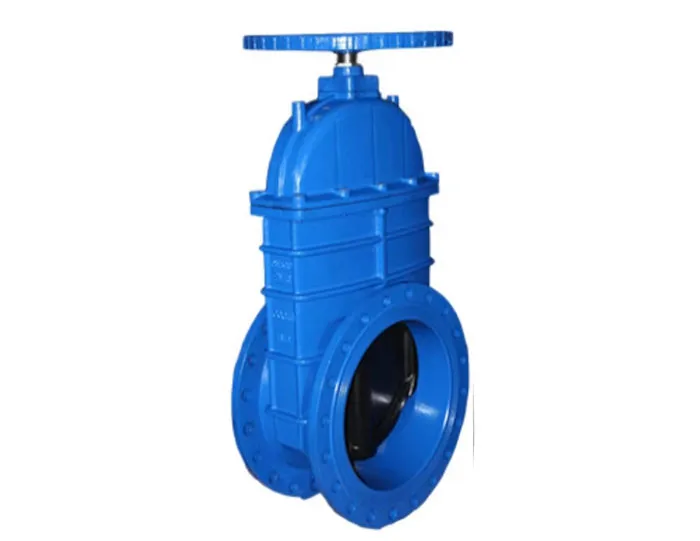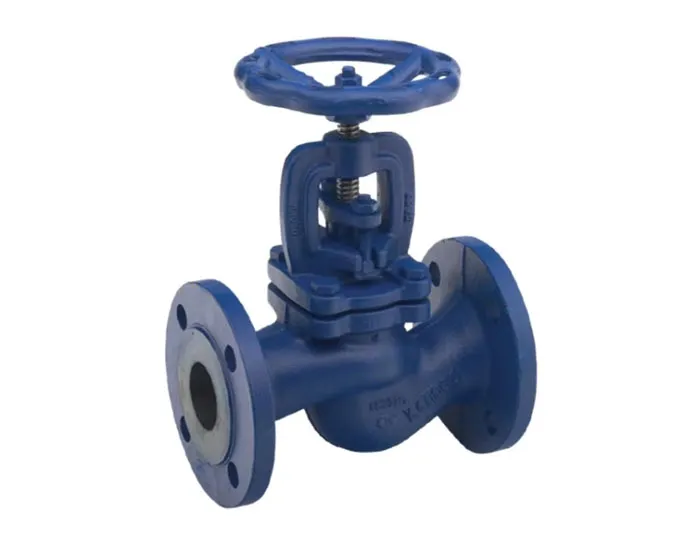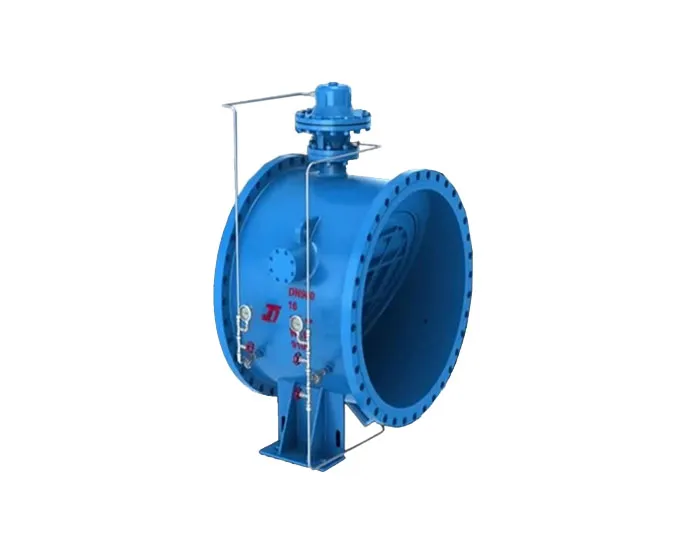
Electrochemical corrosion takes place in electrolyte environments, for example damp air, water and electrolyte liquid. Tiny local batteries form on metal surfaces and create electric current. It causes partial or overall metal damage. This is the most common corrosion for valves.
1. Uniform Corrosion (general corrosion)
Definition: The whole metal surface corrodes evenly. Metal becomes thinner and loses shine, without obvious local damage. Mechanism: Many small batteries cover the metal surface. For carbon steel in wet conditions, thin water film acts as electrolyte. Metal base works as anode; scale or impurities work as cathode. Metal dissolves evenly on anode areas.
Common working conditions:
- Carbon-steel valves in weak sulfuric acid or weak hydrochloric acid.
- Cast-iron valves in wet outdoor air or industrial water.
Harm: Valve walls become thinner slowly, strength drops. Valves may break when walls are too thin. Service life can be calculated by corrosion rate. Standard good resistance: corrosion rate ≤0.1 mm per year.
2. Pitting Corrosion
Definition: Small holes (normally 0.1-1 mm wide) appear locally on metal. Hole depth can be larger than width, and may go straight through the wall. Mechanism: Passive protective films (such as Cr₂O₃ film on stainless steel) get broken by chloride or fluoride ions. Small holes become anode areas while the rest surface acts as cathode. Inside holes oxygen is low, so corrosion speeds up and holes keep growing deeper.
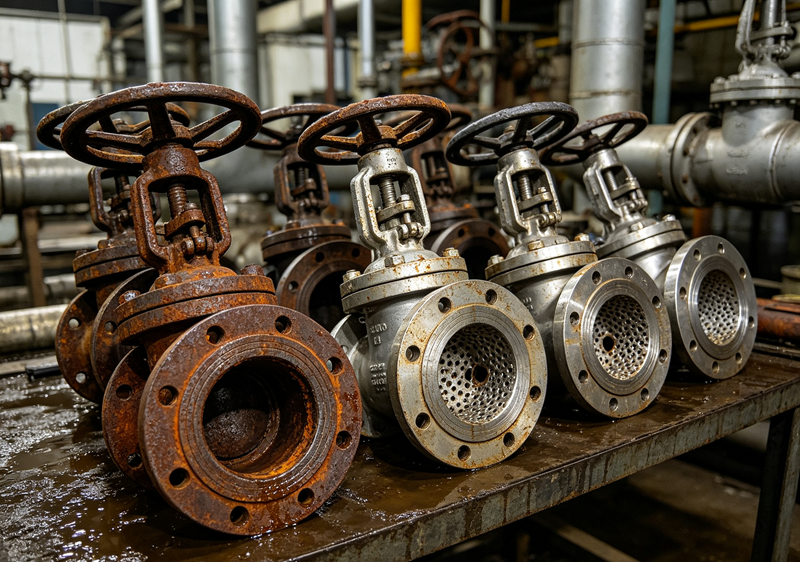
Common working conditions:
- Austenitic stainless-steel valves in water with chloride ions: seawater, salt water, chlorine-added cooling water.
- Copper-alloy valves in acid liquid containing sulfur.
Harm: Total metal loss is small, but tiny holes cause leaks, especially near sealing surfaces. Holes are hard to find by eyes.
3. Crevice Corrosion
Definition: Corrosion inside narrow gaps between valve parts. Gap width is usually 0.025-0.1 mm. Typical gaps: flange gasket-flange face, stem-stuffing box, sealing contact faces. Mechanism: Liquid hardly flows inside gaps. Less oxygen stays inside gaps, so gap areas become anode and outer surfaces become cathode. Liquid inside gaps also turns more acid, which makes corrosion worse.
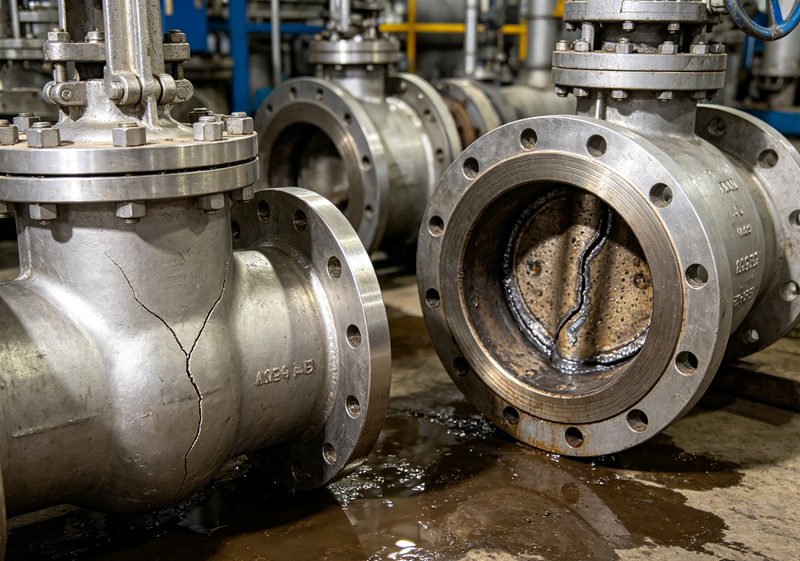
Common working conditions:
- Valve flange joints (gasket-flange gaps).
- Sealing contact areas of ball valves (ball-seat) and butterfly valves (disc-body).
Harm: Corrosion inside gaps breaks sealing and causes flange leakage. Parts may jam, for example valve stem stuck in stuffing box.
4. Intergranular Corrosion
Definition: Corrosion spreads along grain boundaries inside metal. Metal grains themselves barely corrode. The surface looks normal, but metal becomes very weak and breaks along grain lines. Mechanism: Mainly for austenitic stainless steel. When steel stays 450-850 ℃ (sensitization temperature range, caused by welding heat or wrong heat treatment), chromium and carbon combine at grain boundaries to form Cr₂₃C₆. Grain boundaries lose enough chromium (below 12 %) and become easy-to-corrode anode zones.
Common working conditions:
- Welded stainless-steel valves (heat-affected zones get sensitized).
- Stainless-steel valves running long-term near 500 ℃ in chemical heating systems.
Harm: Valves may crack along grain lines under force, for example broken stem or split valve body. Early-stage corrosion cannot be seen from outside.
5. Stress Corrosion Cracking (SCC)
Definition: Brittle cracks appear with three conditions together: sensitive metal material, corrosive liquid, and pulling stress. No big shape change before breaking. It is one of the most dangerous valve corrosion types. Mechanism: Pulling stress (from installation, working pressure, leftover inner stress) creates tiny surface cracks. Corrosive substances like chloride or H₂S go into cracks and make cracks grow fast, until parts break.
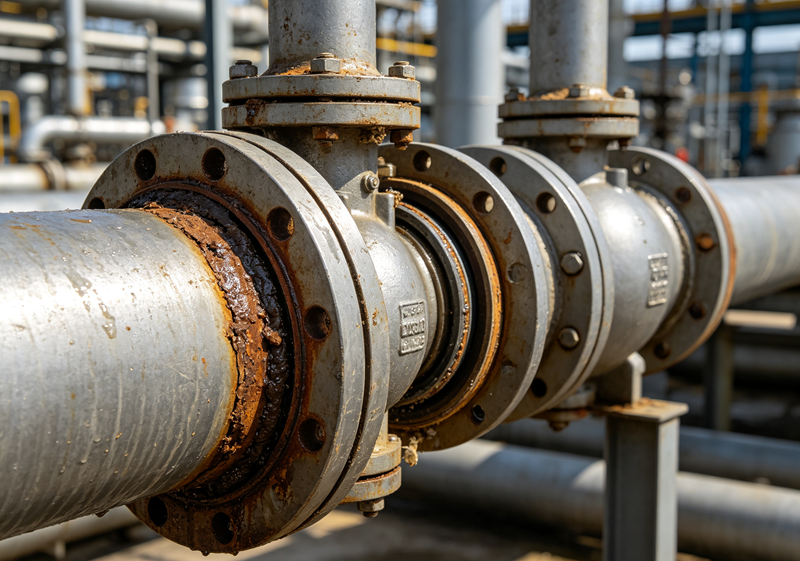
Common working conditions:
- Austenitic stainless-steel valves in chloride-containing liquid at temperature ≥60 ℃, for example hot salt-water systems.
- High-strength-steel valves in H₂S-rich oil-gas wells.
Harm: Cracks expand very fast (several millimeters per hour). Sudden break happens without warning. It may lead to explosion and dangerous medium leakage.
6. Erosion-Corrosion
Definition: Combined damage from mechanical wear and electrochemical corrosion. Fast-flowing fluid or solid particles destroy passive metal films; corrosion makes wear worse, creating a bad cycle. Mechanism:
- Fast-moving liquid (speed >3 m/s) washes away protective surface films.
- Solid particles such as sand or plant fibers hit metal and cause mechanical wear.
- Fresh exposed metal corrodes quickly, which speeds up wear further.
Common working conditions:
- Valves after pump outlets (high-flow-speed fluid).
- Water-treatment valves with sand, pulp-mill valves with fiber particles.
Harm: Flow paths and sealing surfaces get grooves and pits. Flow becomes unstable and seals fail.
7. Hydrogen Embrittlement
Definition: Metal takes in hydrogen atoms. Hydrogen gathers inside metal and creates inner stress. Metal turns brittle and cracks (hydrogen-induced cracking). Mechanism:
- Hydrogen atoms form during corrosion, for example acid-environment hydrogen-producing reaction: 2H⁺ + 2e⁻ → H₂.
- Hydrogen atoms go inside metal and collect at tiny defects. They form hydrogen gas (volume expands) or metal hydrides. Inner stress builds up and produces cracks.
Common working conditions:
- High-strength-steel valves in acid oil-gas wells with H₂S or HCl.
- Electro-plated valve parts (hydrogen enters metal during plating work).
Harm: Parts break later under stress lower than normal yield strength. Fracture may happen hours or months after loading, with no early warning.
8. Microbiologically Influenced Corrosion (MIC / biological corrosion)
Definition: Bacteria, fungi or algae take part in corrosion. Living-organism activities change local environment and speed-up electrochemical corrosion. Mechanism:
- Microbes build sticky bio-films on valve inner surfaces, creating oxygen-difference local batteries.
- Waste products from microbes speed corrosion: sulfate-reducing bacteria make H₂S; nitrifying bacteria make nitric acid.
Common working conditions:
- Water-supply and drainage valves for city projects (sulfate-reducing bacteria in water).
- Valves inside sewage-treatment plants with many kinds of bacteria.
Harm: Bio-films cover flow channels and reduce water flow. Local corrosion brings leakage. Bio-films may also block packing and sealing parts of valves.