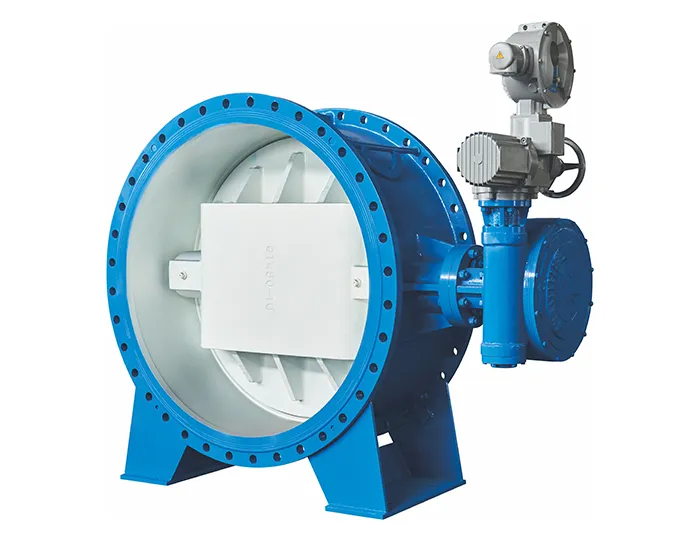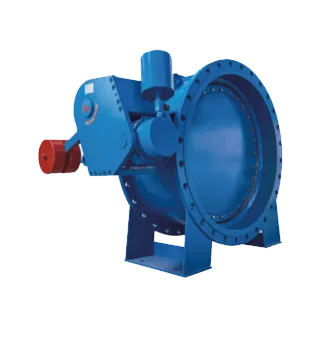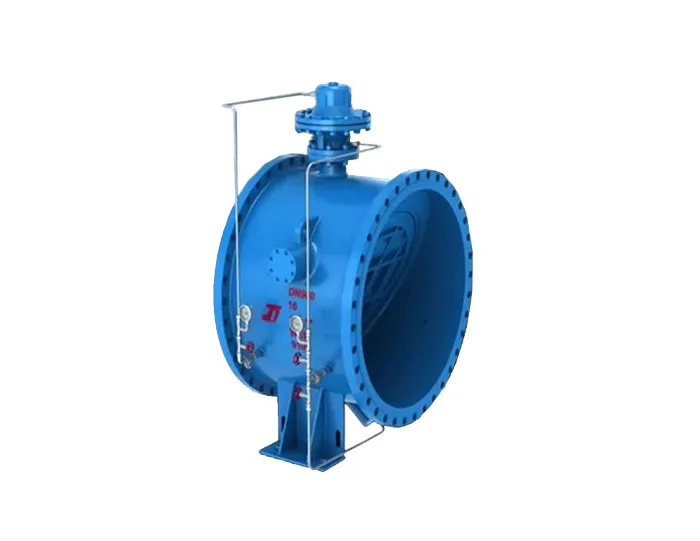
In industrial piping systems, pneumatic butterfly valves are widely adopted across water treatment, chemical, oil & gas, food and pharmaceutical industries for their simple structure, fast on‑off action and easy automated control. How does it open and close driven solely by compressed air? This article provides a full overview of pneumatic butterfly valves, covering their structural composition, operating sequence and application‑oriented selection criteria.
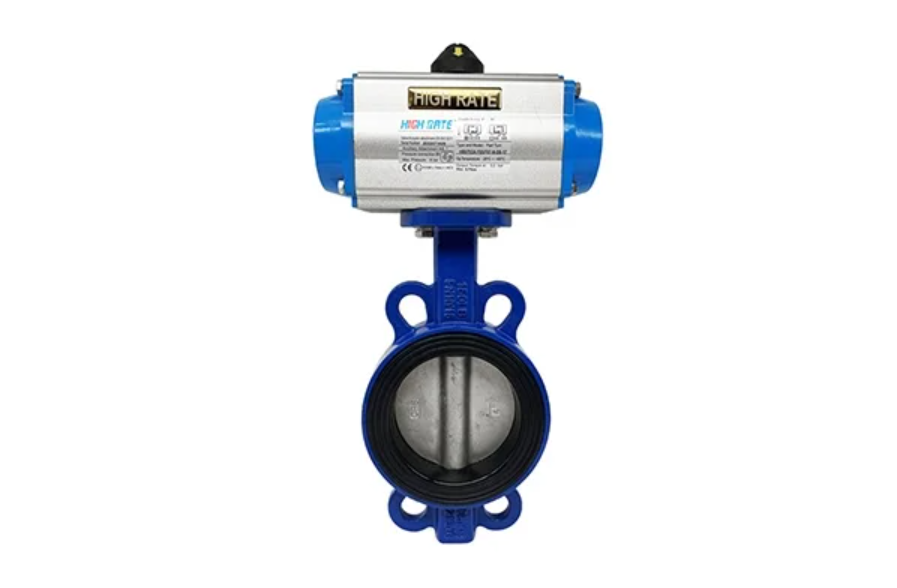
1. What Is a Pneumatic Butterfly Valve
Pneumatic butterfly valve uses compressed air as the power source. A pneumatic actuator drives the rotation of the butterfly disc to realize valve opening, closing and flow regulation. It converts air pressure into mechanical rotary motion, featuring simple operation and rapid response. It is particularly suitable for industrial piping systems requiring remote control and high‑level automation.
2. Two Core Components
2.1 Butterfly Valve Body
The key component is a disc‑shaped butterfly disc. Mounted inside the pipeline via the valve stem, the rotating butterfly disc changes the flow passage area. When the butterfly disc is parallel to the pipeline, the valve is fully open for unobstructed fluid passage. When perpendicular to the pipeline, the valve is fully closed. Sealing rings are generally fitted on the valve body to guarantee tight shut‑off performance.
2.2 Pneumatic Actuator
The actuator is a device powered by compressed air. Common types include piston‑type and vane‑type (rack‑and‑pinion, scotch‑yoke). It converts thrust generated by air pressure into rotary motion of the valve stem, so as to drive the butterfly disc to open, close or stay at any intermediate angular position.
3. Four‑step Working Principle
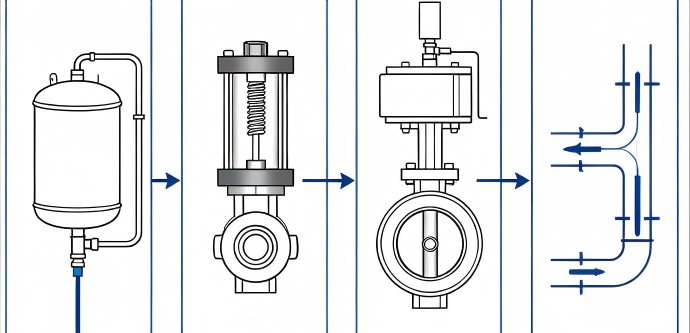
Step 1: Air Supply Inlet
When valve operation is required, the solenoid valve or control valve opens and feeds compressed air into the air inlet port of the pneumatic actuator.
Step 2: Actuate the Butterfly Disc
Compressed air enters the cylinder and pushes the piston or vane. Through the transmission mechanism, it drives the valve stem and butterfly disc to rotate, and the valve starts opening or closing.
Step 3: Flow Regulation
The rotation angle of the butterfly disc determines the flow passage size. By adjusting air supply pressure or control signals, the butterfly disc can be held at intermediate angles to achieve continuous flow regulation.
Step 4: Air Exhaust and Reset
When air supply is vented or the solenoid valve reverses, the built‑in spring inside a single‑acting actuator pushes the butterfly disc back to its preset position. The valve automatically closes (or opens) to realize fail‑safe function.
4. On‑off Type vs. Modulating Type
- On‑off Type: The actuator performs only fully‑open and fully‑closed actions, used for rapid fluid cut‑off or connection.
- Modulating Type: Equipped with a valve positioner, it precisely adjusts butterfly disc opening according to 4‑20 mA or other control signals. It applies to scenarios requiring continuous flow and pressure regulation.
5. Single‑acting vs. Double‑acting
- Single‑acting: Built‑in spring return. It automatically reverts to the preset state upon loss of air supply. Suitable for safety‑critical applications (fail‑closed or fail‑open configuration).
- Double‑acting: Air is supplied to two separate ports to drive bidirectional movement purely by air pressure. It delivers flexible operation yet provides no automatic reset when air supply fails. Stable air source must be maintained.
6. Main Features
- Simple structure and compact footprint for easy installation and maintenance.
- Fast on‑off performance: 90‑degree rotation completes switching with quick response.
- Low flow resistance and minor pressure drop, ideal for large‑diameter pipelines.
- Compatible with accessories including solenoid valves, limit switches, positioners and handwheels, supporting remote control and local manual operation.
7. Typical Application Sectors
- Water Treatment: Flow control and shut‑off for tap water, sewage and circulating water systems.
- Chemical Industry: Conveyance and regulation of corrosive and neutral media.
- Oil & Gas: Quick cut‑off for pipeline transportation and storage systems.
- Food & Pharmaceutical: Sanitary‑grade butterfly valves paired with clean air sources to meet hygiene requirements.
- HVAC: Automatic regulation for chilled / hot water and cooling water circuits.
8. Operation and Maintenance Tips
- Keep the air source dry and clean. A filter‑regulator is recommended to prevent impurities and moisture from damaging the actuator.
- Inspect wear on sealing rings and butterfly disc periodically; replace components promptly once leakage occurs.
- Perform regular opening‑closing cycles for long‑idle valves to avoid butterfly disc jamming.
- During selection, comprehensively evaluate medium properties, pressure, temperature, nominal diameter, action type and control requirements. Consult the manufacturer’s technical support when necessary.
With advancing industrial automation, pneumatic butterfly valves will play an increasingly important role in remote control and intelligent regulation. Understanding their working principle facilitates proper selection and installation, and enables faster troubleshooting during daily operation.