More people advocate green living and low-carbon environmental protection. Thus, LNG has become a popular clean energy. Natural gas is a high-quality clean energy and is widely used in energy and transportation fields.
China has abundant natural gas resources. However, large-scale natural gas exploitation faces many difficulties. The development and application of LNG fall behind. There are many problems in its process design, construction and operation, which need further research. In modern times, we must guarantee the quality of LNG cryogenic valves to ensure safe and efficient LNG storage and transportation.
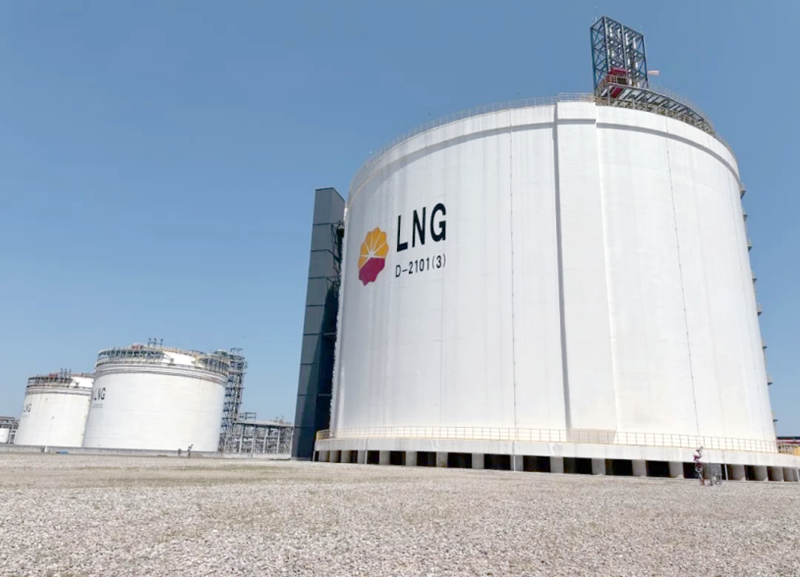
Common cryogenic valves work at temperatures from -60℃ to -120℃. Valves working at -100℃ to -196℃ are ultra-low temperature valves. To ensure stable performance, cryogenic valves are specially treated. Roughly processed parts are placed in cooling media for several hours to release internal stress. This keeps parts stable in size and prevents valve leakage caused by low-temperature deformation.
1. Types of Cryogenic Valves
1.1 Control Valves
Control valves include single-seat straight-through valves and multi-stage pressure reducing valves. They accurately control LNG flow and pressure during production, storage and transportation. They are key equipment in LNG plants, accounting for about 30% of all plant valves.
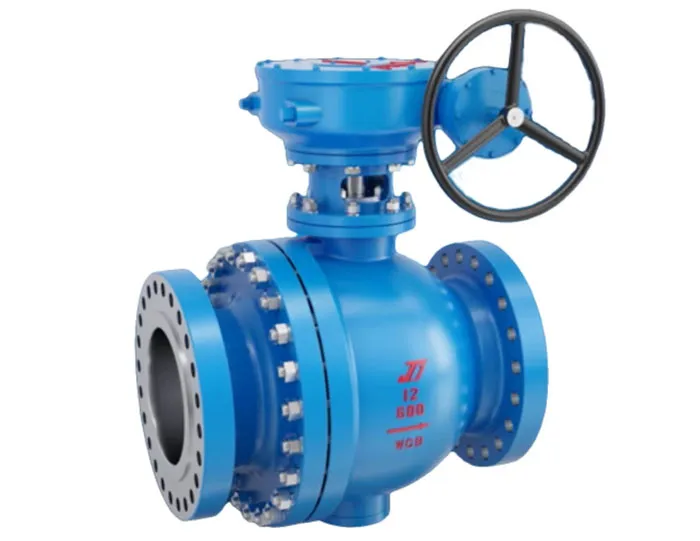
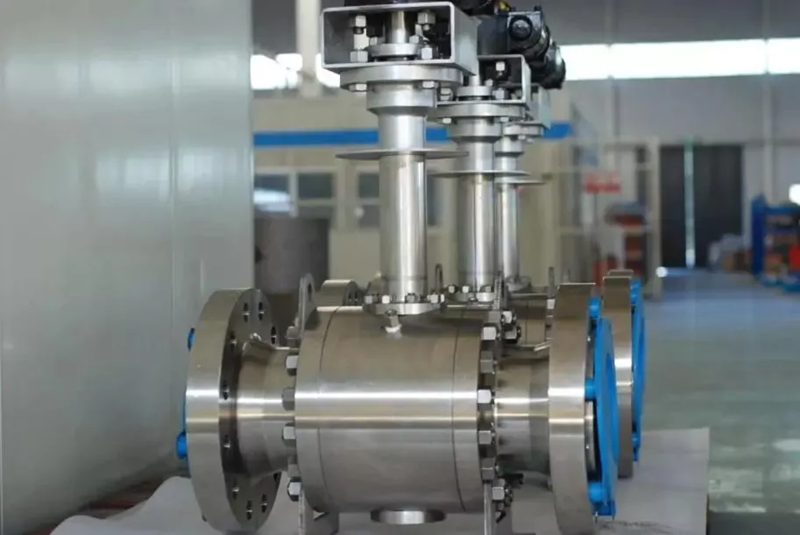
Ball valves have a simple structure, good sealing effect and low flow resistance. They are widely used in LNG projects. In LNG receiving terminals, ball valves make up about 75% of all ultra-low temperature valves.
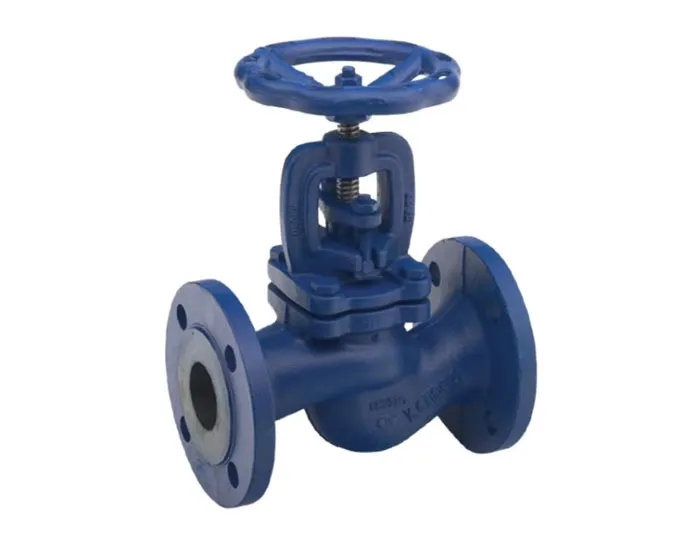
1.3 Globe Valves
Globe valves are used to open or close LNG flow. They fit occasions that need precise fluid control.
1.4 Check Valves
Check valves stop LNG from flowing backward and protect pipeline systems from pressure damage.
1.5 Breather Valves
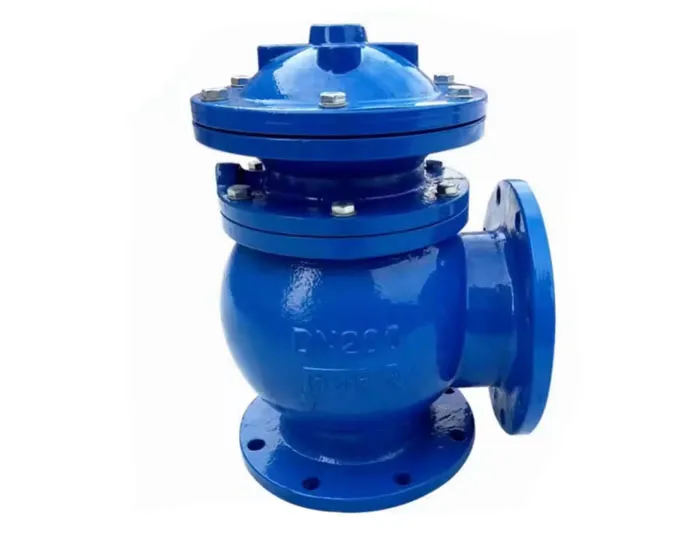
Breather valves are installed in LNG storage tanks. They balance the pressure inside and outside the tank to avoid equipment damage from pressure changes.
1.6 Ultra-low Temperature Axial Check Valves
These valves save energy, reduce noise and flow resistance, and prevent water hammer. They open and close quickly. They are widely used in oil and gas transmission pipelines and key anti-backflow positions of large LNG receiving terminals.
1.7 Thermal-melt Emergency Shut-off Valves
This kind of valve is used for emergency cut-off of low-temperature media. It is suitable for low-temperature fluids such as liquid natural gas, oxygen, nitrogen, argon and ethylene.
With the fast development of the LNG industry, the demand for cryogenic valves is growing rapidly, especially for LNG plants and receiving terminals. A large LNG receiving terminal needs about 3,500 ultra-low temperature valves, taking up over 90% of its total valve number.
Thanks to technological progress, domestic enterprises have made breakthroughs in cryogenic valve manufacturing. They have broken the monopoly of foreign brands and realized local production of such valves.
2. Material Selection for Cryogenic Valves
Valve materials determine its strength, reliability and service life. Cryogenic valves need to work stably for a long time in low-temperature environments, with a standard service life of 10 years or 3,000 to 5,000 opening and closing cycles.
Austenitic stainless steel is the main material for LNG cryogenic valves, and common models include A351 CF8, A351 CF8M, A182 F304 and A182 F316.
Hard sealing is the mainstream choice for LNG cryogenic valve sealing surfaces. Fluoroplastic shrinks greatly at low temperatures, which will weaken sealing performance and cause leakage. Asbestos packing cannot stop permeation leakage, and rubber will expand and fail to work in low-temperature LNG environments.
Therefore, LNG cryogenic ball valves usually adopt a composite sealing structure of metal and embedded PCTFE soft seal. The valve stem packing uses a combined structure of lip seal ring and graphite.
In valve design, a long bonnet structure is adopted to keep the packing gland away from low-temperature media and work at near room temperature. Common packing materials are polytetrafluoroethylene-impregnated asbestos, flexible graphite and woven graphite composite materials.
These materials prevent gas and liquid leakage. They have 10% to 15% compression rate, which can achieve good sealing with low fastening pressure. Besides, they have self-lubricating property and reduce wear between packing and valve stem.
Gaskets for cryogenic valves must keep good sealing and resilience at normal and low temperatures. Common choices are spiral wound gaskets made of acid-resistant steel strip and graphite or polytetrafluoroethylene. The graphite and acid-resistant steel gasket works well even at -200℃.
Fastener materials are selected according to the minimum working temperature. In line with ASTM standards, fasteners below -100℃ are made of austenitic stainless steel (secondary grade).
To avoid bolt and nut jamming during assembly, nuts are made of molybdenum steel and nickel steel, and molybdenum disulfide is coated on thread surfaces.