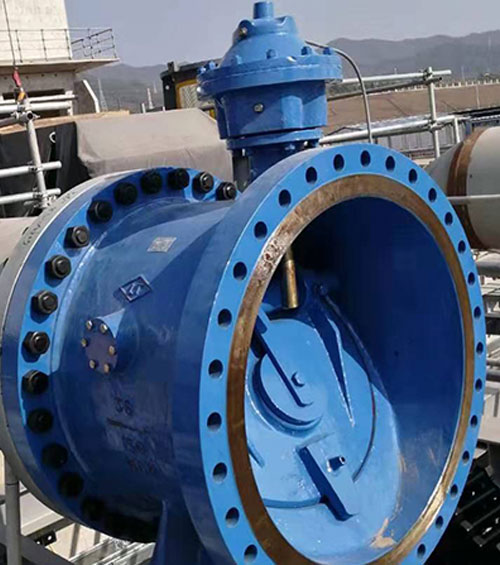
Flowserve Energy-Efficient Valves: Technologies, Applications, and the Energy Advantage Program
Industrial energy efficiency is not determined by a single piece of equipment. In fluid-handling systems, valves, pumps, pipelines, and control strategies all influence total energy consumption. Poor valve selection, excessive throttling, and unnecessary pressure losses can increase pumping power requirements and operating costs.
Flowserve Corporation approaches energy efficiency through a combination of valve engineering, system-level analysis, and lifecycle services. Rather than focusing on one specific category of energy-saving valves, the company combines valve designs intended to reduce pressure losses or auxiliary power consumption with its Energy Advantage Program (EAP), which evaluates entire pump and valve flow loops to identify opportunities for energy savings.
This article examines Flowserve's energy-efficient valve technologies, its EAP approach, relevant emissions and safety standards, and the role of global manufacturing and service capabilities in supporting industrial efficiency projects.
1. How Flowserve Approaches Industrial Valve Energy Efficiency
Industrial valves affect energy consumption in several ways. Their internal flow passages, pressure-drop characteristics, operating mechanisms, and control strategies can all influence the power required to move fluids through a system.
Flowserve's approach to energy efficiency can be understood through three main areas:
- Hydraulic efficiency: Valve designs that help reduce unnecessary pressure losses and improve flow characteristics.
- Mechanical and electrical efficiency: Valve configurations that can reduce actuator requirements or auxiliary power consumption.
- System-level optimization: Engineering assessments that identify inefficient operating conditions across pumps, valves, and complete flow loops.
These factors are particularly important in energy-intensive industries such as oil and gas, chemical processing, power generation, refining, and renewable energy.
2. Flowserve Valve Technologies Designed to Improve Energy Efficiency
Flowserve's valve portfolio includes several designs with efficiency-related benefits. The specific advantages depend on the application, operating conditions, valve sizing, and system configuration.
2.1 Valtek TX3 Molten Salt Triple-Offset Butterfly Valve
The Valtek TX3 Molten Salt Triple-Offset Butterfly Valve is designed for concentrated solar power (CSP) applications and molten-salt thermal energy storage systems.
In these high-temperature applications, reducing auxiliary power consumption is an important part of overall system efficiency.
The TX3 design incorporates several features intended to address thermal management and electrical energy demand:
- Reduced thermal losses: The packing arrangement is positioned closer to the valve body to help reduce heat loss.
- Optimized electrical heat tracing (EHT): The heating strategy is designed to reduce unnecessary electrical demand.
- High-temperature operation: According to the stated product information, EHT is used below 400°C (752°F), while operation above this temperature does not require EHT.
By optimizing the use of electrical heat tracing, the valve can help reduce auxiliary power consumption in suitable molten-salt applications.
2.2 Durco Big Max BX2001
The Durco Big Max BX2001 is a general-service valve designed with attention to operating costs and system economics.
Its design supports lighter piping arrangements and the use of more economical actuators for both throttling and on/off applications.
Potential efficiency-related benefits include:
- Reduced equipment and installation costs through lighter system configurations.
- More economical actuator selection, depending on operating requirements.
- Flexible use in throttling and isolation applications.
The overall energy benefit depends on actuator sizing, operating frequency, process conditions, and the valve's position within the system.
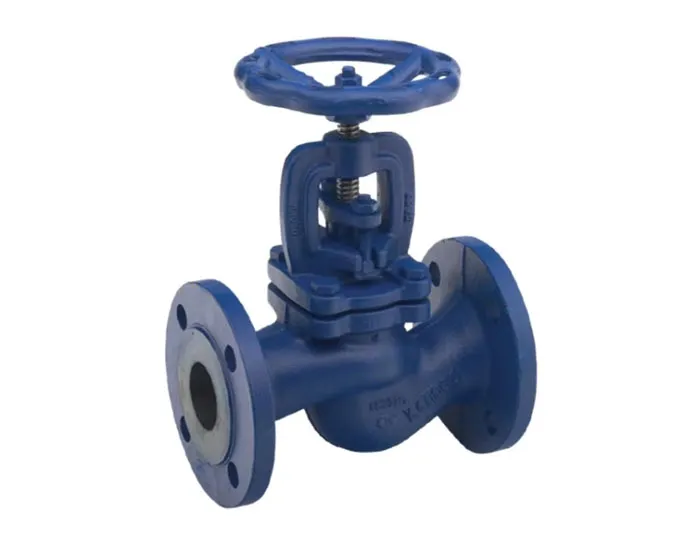
2.3 Edward Flite-Flow Globe Valves
The Edward Flite-Flow Globe Valve addresses energy efficiency primarily through hydraulic design.
Its Y-pattern body is designed to optimize the internal flow passage, reduce unnecessary changes in flow direction, and minimize pressure drop compared with less optimized flow configurations.
Reducing pressure loss across a valve can lower the additional pumping energy required to maintain a given flow rate.
This is especially relevant in systems where valves operate continuously and account for a significant proportion of the total pressure loss.
The Flite-Flow design also focuses on shut-off performance and durability, supporting reliable operation in demanding industrial services.
2.4 Multiport Plug Valves: Dynamic Balance, Super Nordstrom, and Nordstrom Iron
Flowserve's multiport plug valve designs, including Dynamic Balance, Super Nordstrom, and Nordstrom Iron configurations, offer another approach to system efficiency.
A single multiport valve can perform flow-routing functions that might otherwise require two to four conventional straightway valves.
This configuration can help simplify piping layouts and reduce the number of individual components in a manifold.
Potential benefits include:
- Fewer valve bodies and connection points.
- Reduced piping complexity and installation requirements.
- Fewer potential leak paths.
- More compact flow-routing arrangements.
The actual pressure-loss and energy benefits depend on the internal port configuration, flow direction, valve sizing, and process operating conditions.
2.5 System II Precision Cast Ball Valves
The System II Precision Cast Ball Valve product line focuses on cost-effective valve construction and sealing performance.
Compared with forged valve alternatives, precision cast designs can offer cost advantages in suitable applications. The product line also features a patented live-loaded stem seal packing design, with an optional Fugitive Emission Monitor (FEM).
These features address two important aspects of industrial equipment performance:
- Sealing reliability: Live-loaded packing is designed to maintain sealing force and help manage stem leakage.
- Environmental monitoring: The optional FEM provides a way to monitor fugitive emissions.
Although fugitive-emission control is not the same as hydraulic energy efficiency, it contributes to environmental performance and more responsible equipment operation.
3. Flowserve Energy Advantage Program (EAP): Improving Efficiency at the System Level
Individual valve improvements can contribute to energy savings, but the greatest opportunities may exist across an entire pump and valve system.
Flowserve's Energy Advantage Program (EAP) takes a system-level approach to identifying and reducing unnecessary energy consumption.
Instead of evaluating valves in isolation, the program examines complete flow loops, including pumps, control valves, operating conditions, and process requirements.
3.1 How the Energy Advantage Program Works
The EAP uses engineering assessments and operating data to identify where energy is being consumed unnecessarily.
The evaluation can include:
- Reviewing pump and valve operating conditions.
- Identifying excessive pressure drops across control valves.
- Assessing opportunities to reduce unnecessary valve throttling.
- Evaluating pump operating points and system requirements.
- Identifying opportunities to upgrade manual valves to automated control valves.
- Recommending system modifications to improve operating efficiency.
The objective is to improve the relationship between flow requirements, pressure losses, and equipment power consumption while minimizing disruption to ongoing operations.
3.2 Key Energy-Saving Strategies
Several measures can be considered during an EAP assessment.
Reducing unnecessary control-valve throttling
When a control valve operates with excessive pressure drop, part of the energy supplied by the pump is dissipated across the valve. Reviewing valve sizing, operating conditions, and control strategies can help identify opportunities to reduce this loss.
Optimizing pump and valve operating conditions
Pump performance and valve operation are closely connected. Adjusting the system operating point and reducing unnecessary resistance can help lower total power consumption.
Upgrading manual valves to automated control valves
In suitable applications, automation can improve process control and reduce inefficient operating practices. The benefits depend on the control strategy, instrumentation, and process requirements.
Improving valve reliability
Reducing excessive pressure drop and operating stress may also help improve valve reliability in appropriate applications. However, reliability improvements depend on the valve design, material selection, and actual service conditions.
3.3 Reported Energy Advantage Program Results
Flowserve has reported measurable energy and cost savings from EAP projects. The figures below are examples of reported project outcomes and should be interpreted in the context of each site's operating conditions and assessment scope.
| Project or Metric | Reported Outcome |
|---|---|
| Heide Refinery, Germany – Expected annual power reduction | More than 2,000 MWh/year |
| Heide Refinery – Expected annual CO₂ reduction | More than 1,300 metric tons/year |
| Cumulative EAP savings cited by Flowserve | 225 GWh of energy |
| Cumulative CO₂ reduction cited by Flowserve | 56,480 metric tons |
| Cumulative operational cost savings cited by Flowserve | $28.4 million |
| Another EAP customer example – Annual energy savings | 2,229 MWh/year |
| Another EAP customer example – Annual cost savings | €334,000/year |
These examples demonstrate how system-level assessments can identify opportunities beyond replacing individual valves.
Actual savings vary according to equipment condition, operating hours, energy prices, process requirements, and the implementation of recommended improvements.
4. Fugitive Emission and Fire-Safe Standards in Flowserve Valve Design
Energy efficiency is only one part of industrial valve performance. Environmental protection, operational safety, and leakage control are also important considerations when selecting valves for demanding applications.
Flowserve offers valve products designed to meet various international fugitive-emission and fire-safe standards.
Examples of product families identified in the supplied product information include:
- Argus FK79 floating ball valve.
- Argus FK76M trunnion-mounted ball valve.
- HK35 trunnion ball valve.
- Atomac AKH3.2 lined ball valve.
- Valbart VW1 welded-body valve.
Relevant standards include:
ISO 15848 – Industrial Valves: Measurement, Test and Qualification Procedures for Fugitive Emissions
ISO 15848 provides testing and qualification requirements for fugitive emissions from industrial valves. Compliance is relevant to applications where controlling external leakage is an important environmental and operational requirement.
API 641 – Fugitive Emissions Testing for Quarter-Turn Valves
API 641 specifies fugitive-emission testing requirements for quarter-turn valves. It is relevant when evaluating the emissions performance of applicable ball and butterfly valve designs.
API 607 and API 6FA – Fire Testing Requirements
These API standards address fire testing for applicable valve designs. Their requirements help evaluate valve performance under specified fire-test conditions.
ISO 10497 – Fire Type-Testing Requirements
ISO 10497 specifies fire type-testing requirements for valves used in industrial applications.
The Atomac AKH3.2 lined ball valve has been identified in the supplied product information as an early lined-ball-valve design to comply with both API 641 and ISO 15848. The exact certification scope and the term "first" should be verified against current manufacturer documentation before publication.
It is important to distinguish between energy efficiency, fugitive-emission performance, and fire safety. These standards address different aspects of valve performance and should not be treated as direct measurements of energy savings.
5. Flowserve's Global Manufacturing and Service Network
Flowserve Corporation is headquartered in the United States and supplies flow-control products and services to industrial markets worldwide.
Its operations include pump and flow-control businesses, supporting applications across oil and gas, chemical processing, power generation, water, and other industrial sectors.
The company's global manufacturing and service network is relevant to valve lifecycle management, including product supply, maintenance, replacement parts, and engineering support.
According to the organizational figures provided for this article:
5.1 Flowserve Pumps Division (FPD)
The Pumps Division is reported to operate across 48 countries, with:
- 38 manufacturing facilities.
- 13 facilities in North America.
- 11 facilities in Europe and the Middle East.
- 8 facilities in Asia Pacific.
- 6 facilities in Latin America.
- 126 Quick Response Centers (QRCs).
5.2 Flow Control Division (FCD)
The Flow Control Division focuses on valve and related flow-control products.
The supplied figures identify 44 manufacturing facilities and Quick Response Centers across 22 countries, with manufacturing operations in the United States, Europe, the Middle East, and other regions.
A global service network can support industrial customers through local engineering assistance, spare-parts availability, maintenance, and lifecycle services.
For energy-efficiency projects, these capabilities can be important because successful implementation often requires more than selecting a new valve. Equipment assessment, correct installation, commissioning, and ongoing maintenance also influence long-term performance.
6. Industrial Valve Types Related to Energy Efficiency
Different valve designs serve different flow-control requirements. Selecting the right configuration can help improve system performance, reduce unnecessary pressure losses, and support reliable operation.
The following valve types are relevant when evaluating industrial flow-control solutions.
6.1 Half Ball Valves
Half ball valves are designed for specific flow-control and isolation applications. Their suitability depends on the required flow characteristics, pressure rating, media, and operating conditions.
For systems requiring specialized flow-control configurations, reviewing the valve's internal geometry and pressure-loss characteristics is important.
6.2 Floating Ball Valves
Floating ball valves use line pressure to help press the ball against the downstream seat, creating a sealing effect.
They are commonly used in industrial isolation applications. Proper sizing, seat selection, and flow-path design are important when evaluating their operating performance.
Learn more about Floating Ball Valve designs and their applications in industrial fluid systems.
6.3 Trunnion Mounted Ball Valves
Trunnion mounted ball valves support the ball with upper and lower mechanical anchors, reducing the load transferred to the seats in larger or higher-pressure applications.
They are widely used in demanding pipeline services, including oil and gas transportation.
For applications involving high pressure and large diameters, selecting the appropriate Trunnion Mounted Ball Valve requires consideration of pressure rating, sealing design, materials, and operating conditions.
6.4 Fully Welded Ball Valves
Fully welded ball valves feature a welded body construction that eliminates body-joint leakage paths associated with certain bolted-body designs.
They are commonly considered for buried pipelines and long-distance transmission systems where structural integrity and external leakage prevention are important.
A properly selected Fully Welded Ball Valve can support reliable pipeline operation and reduce maintenance requirements in suitable applications.
6.5 Wafer Butterfly Valves
Wafer butterfly valves feature a compact, lightweight body that fits between pipeline flanges.
Their compact construction can reduce installation space and equipment weight. They are often used in water treatment, HVAC, general industrial services, and other applications where a compact isolation valve is required.
Explore Wafer Butterfly Valve designs for applications requiring space-efficient pipeline installation and reliable flow isolation.
7. How to Select Energy-Efficient Industrial Valves
Choosing an energy-efficient valve requires evaluating the complete operating system rather than focusing on a single product specification.
The following factors should be considered during valve selection:
| Selection Factor | Why It Matters |
|---|---|
| Pressure drop | Excessive pressure loss can increase pumping energy requirements. |
| Flow characteristics | Internal geometry affects flow resistance and control performance. |
| Valve sizing | Oversized or undersized valves may operate inefficiently. |
| Operating conditions | Pressure, temperature, media, and flow rate influence valve performance. |
| Actuator requirements | Actuator sizing and operating frequency affect auxiliary power consumption. |
| Sealing performance | Leakage control supports process efficiency and environmental performance. |
| Maintenance requirements | Reliable operation helps reduce downtime and lifecycle costs. |
| Applicable standards | Industry standards help establish requirements for emissions, fire safety, and testing. |
For demanding industrial applications, valve selection should be based on engineering calculations, manufacturer performance data, and the actual process operating conditions.
8. Summary: A System-Level Approach to Energy-Efficient Valves
Flowserve's approach to energy-efficient industrial valves combines specialized valve engineering with system-level energy optimization.
Several product designs address different sources of energy consumption. The Valtek TX3 focuses on reducing auxiliary electrical demand in molten-salt applications, Edward Flite-Flow globe valves use a Y-pattern design to help reduce pressure loss, and multiport plug valves can simplify flow-routing arrangements by replacing multiple conventional valves.
The Energy Advantage Program (EAP) extends this approach beyond individual components. By assessing complete pump and valve flow loops, it helps identify opportunities to reduce unnecessary throttling, optimize pressure losses, and improve operating strategies.
Flowserve's reported project results, including energy and CO₂ savings, illustrate the potential value of system-level optimization. However, actual results depend on site conditions, equipment selection, and the implementation of engineering recommendations.
Ultimately, energy-efficient valve selection is not simply about choosing a product with a low-pressure-drop design. It requires understanding the entire fluid system, matching valve performance to process requirements, and considering energy consumption throughout the equipment lifecycle.
Frequently Asked Questions (FAQ)
1. What makes an industrial valve energy-efficient?
An industrial valve can contribute to energy efficiency through low-pressure-drop flow passages, suitable flow characteristics, efficient actuation, and reliable sealing. The actual energy benefit depends on the valve's operating conditions and its role in the complete system.
2. How does Flowserve improve industrial energy efficiency?
Flowserve combines valve technologies designed for specific efficiency requirements with engineering services such as its Energy Advantage Program. The program evaluates pump and valve flow loops to identify opportunities to reduce pressure losses and power consumption.
3. What is the Flowserve Energy Advantage Program (EAP)?
The Energy Advantage Program is a system-level assessment approach that examines pump and valve operating conditions. It can identify opportunities to reduce excessive control-valve throttling, optimize pressure losses, and improve automation strategies.
4. How does pressure drop affect pump energy consumption?
Pressure drop represents a loss of pressure as fluid passes through equipment such as valves and pipelines. When a system has excessive pressure losses, pumps may need to supply additional energy to maintain the required flow and pressure.
5. Can automated control valves reduce energy consumption?
Automated control valves can help improve process control and operating consistency. They may contribute to energy savings when automation reduces unnecessary throttling or improves the overall control strategy. The results depend on system design and operating conditions.
6. What is the difference between energy efficiency and fugitive-emission performance?
Energy efficiency concerns how effectively a system uses power to move or control fluids. Fugitive-emission performance concerns the control of unintended external leakage from valves. Both are important aspects of industrial performance, but they are measured and evaluated differently.
7. How should I choose an energy-efficient industrial valve?
Consider the required flow rate, operating pressure, temperature, media, pressure drop, valve size, actuator requirements, sealing performance, and applicable industry standards. Engineering evaluation and manufacturer technical data should be used to confirm suitability.